

How a Reworked Floor Plan Transformed a Historic Home Kitchen (Before & After)


Renovating a historic home requires more than good taste — it requires a strategic, flexible design approach.
In this project, a reworked floor plan completely transformed an outdated kitchen in an old house into a space that works for modern living. Through multiple design iterations, 3D renderings, and real-time adjustments during renovation, we created a layout that balances function, flow, and historic character.
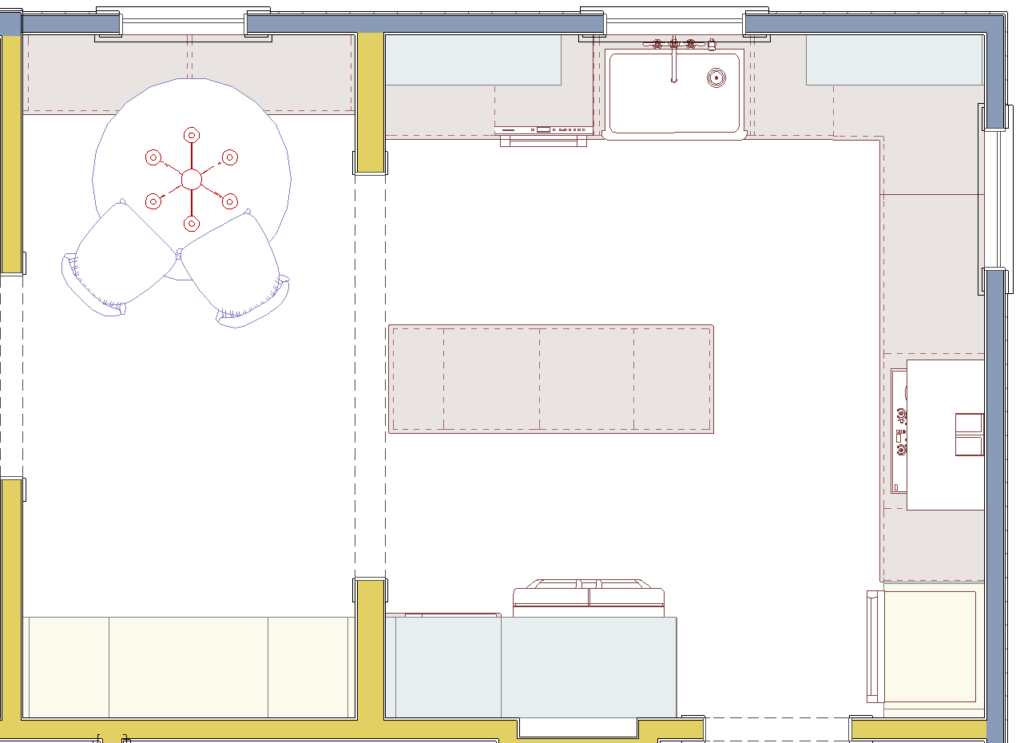
The Starting Point
Challenges in a Historic Home Kitchen Layout
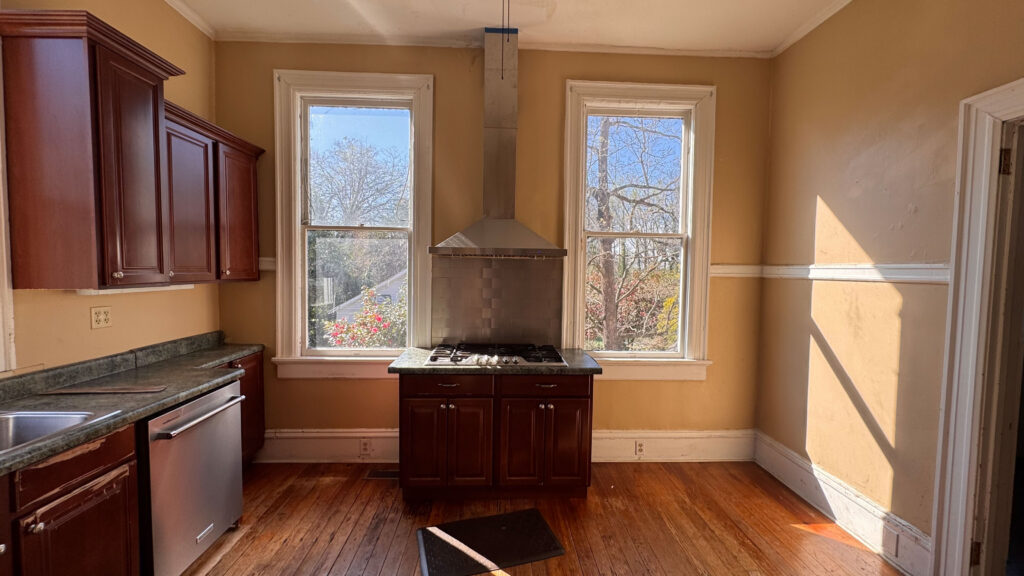
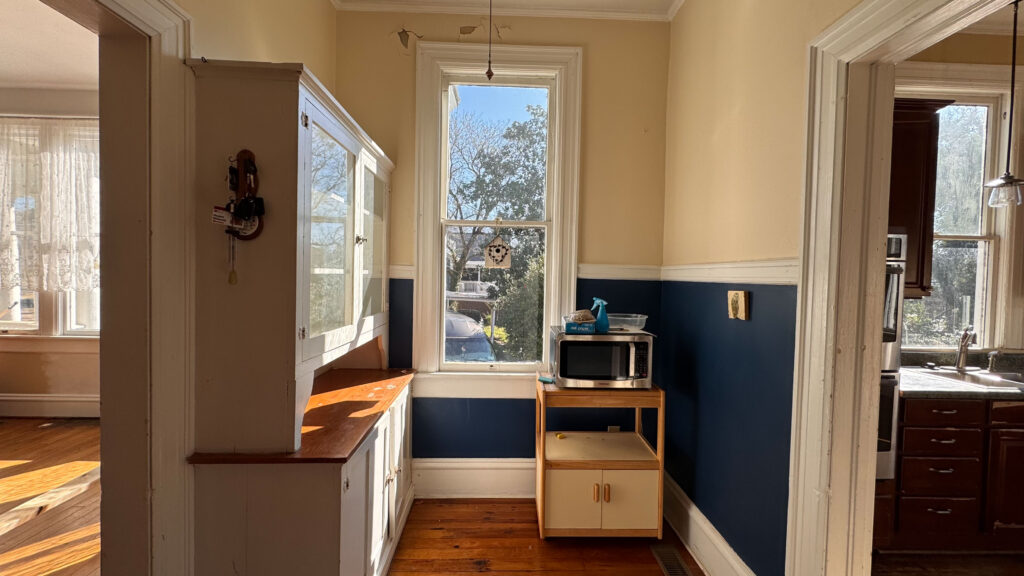
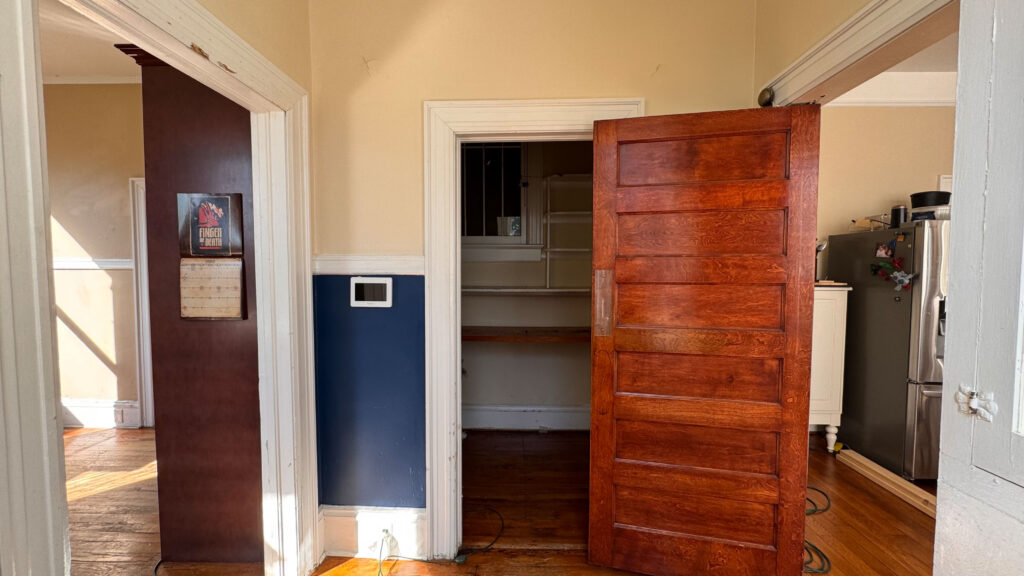
Like many historic homes, this kitchen reflected a different era of living. The kitchen was separated from the dining room by a butler’s pantry making it feel closed off, the flow was inefficient, and it didn’t support how the homeowners wanted to use the space day to day. It also had been renovated during the late 80’s or 90’s, and it showed.
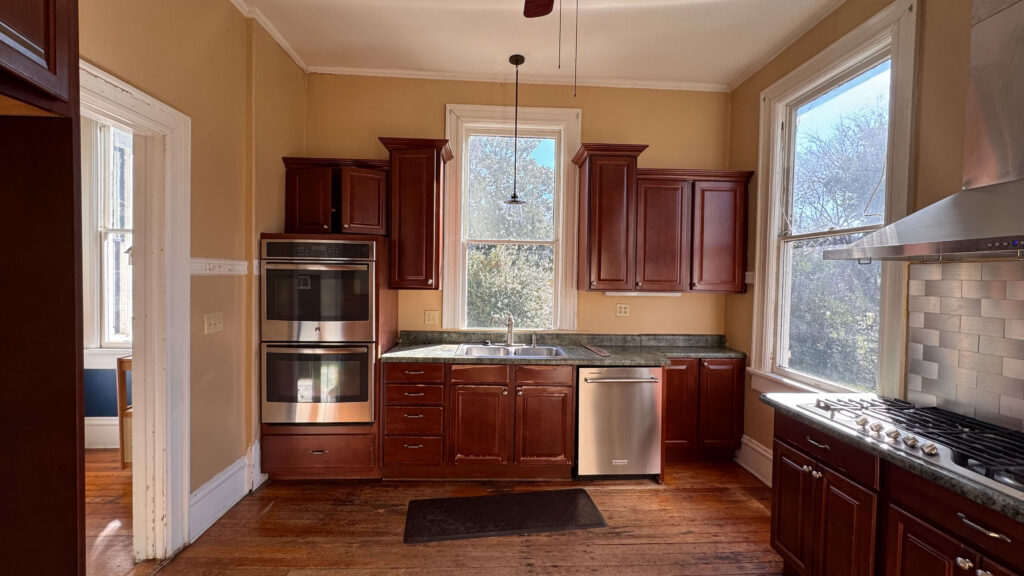
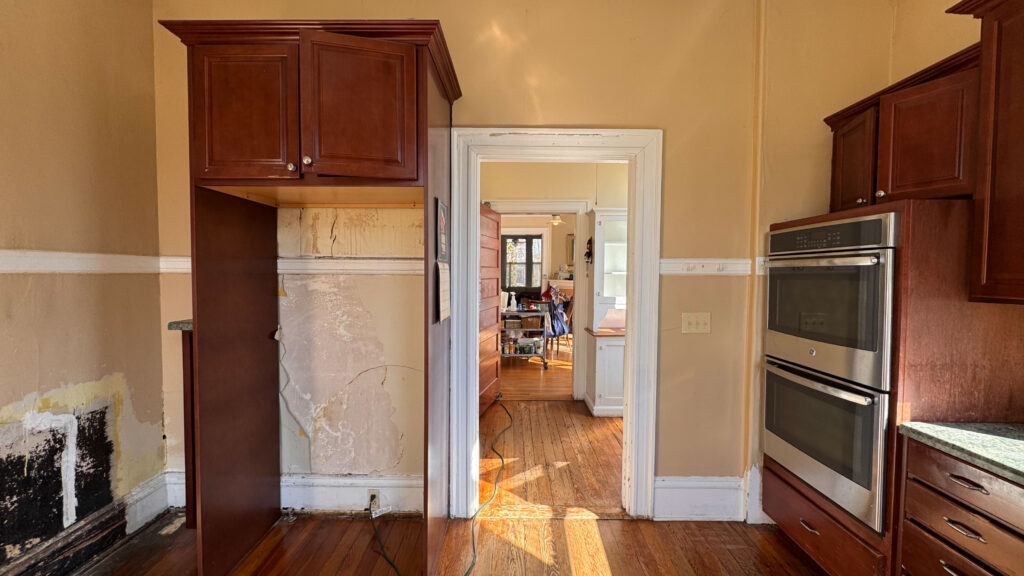
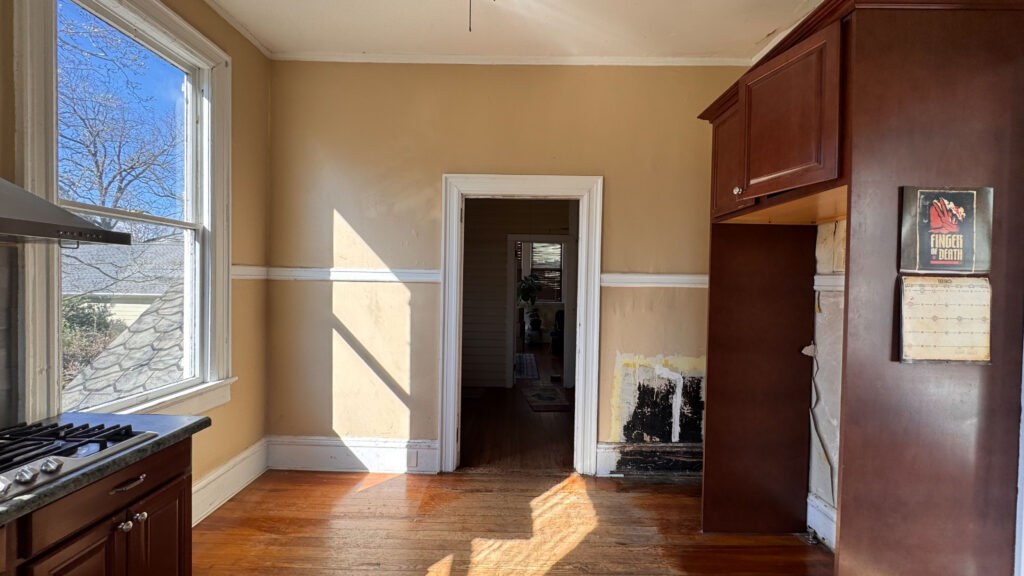
Their goals were clear:
- Create a more functional kitchen layout
- Improve flow and connection to adjacent spaces
- Maximize storage
- Preserve the character of the home
Simple in theory. More complex in an old house renovation.
Design Phase
Creating a Reworked Floor Plan with 3D Renderings
When working on a historic home, I often times have to think outside the box.
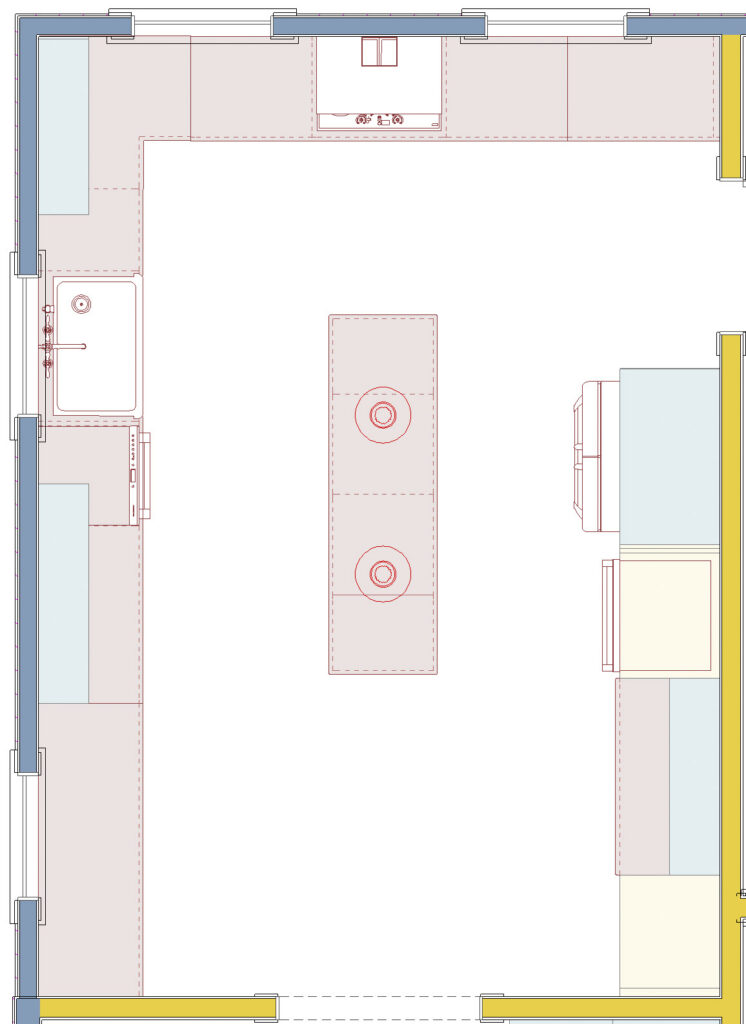
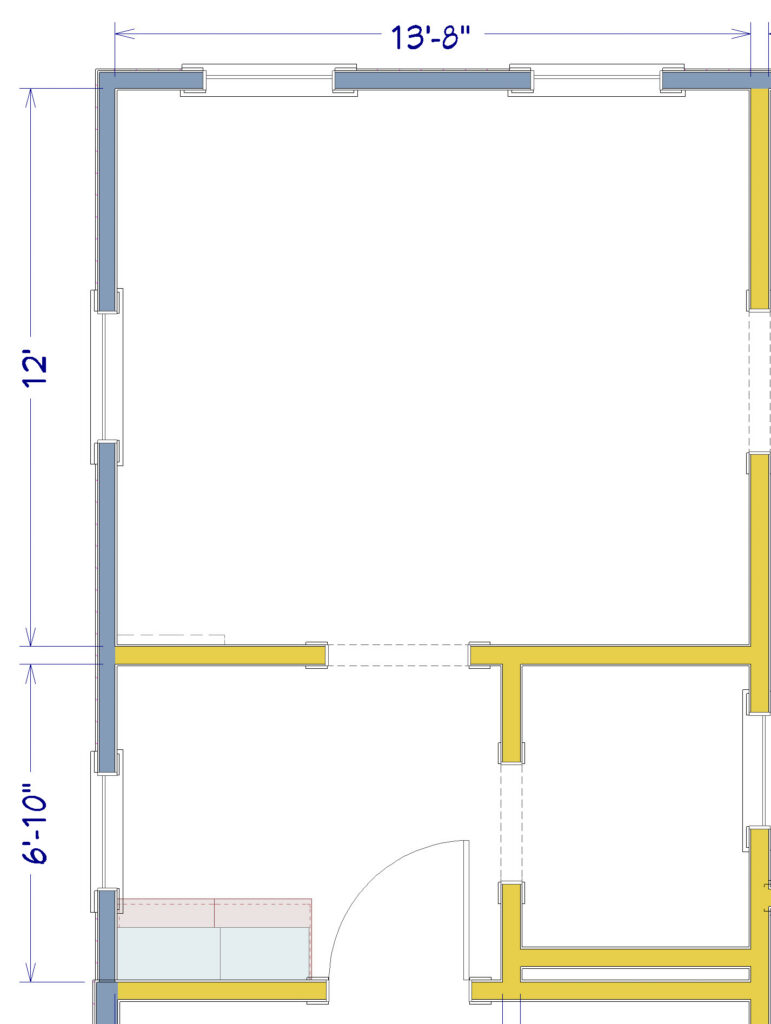
For this renovation, I developed two reworked floor plan options to prepare for a structural wall we weren’t sure could be removed:
- Plan A: Remove a structural wall to open the kitchen to the surrounding spaces
- Plan B: Keep the wall and create a more efficient layout around it
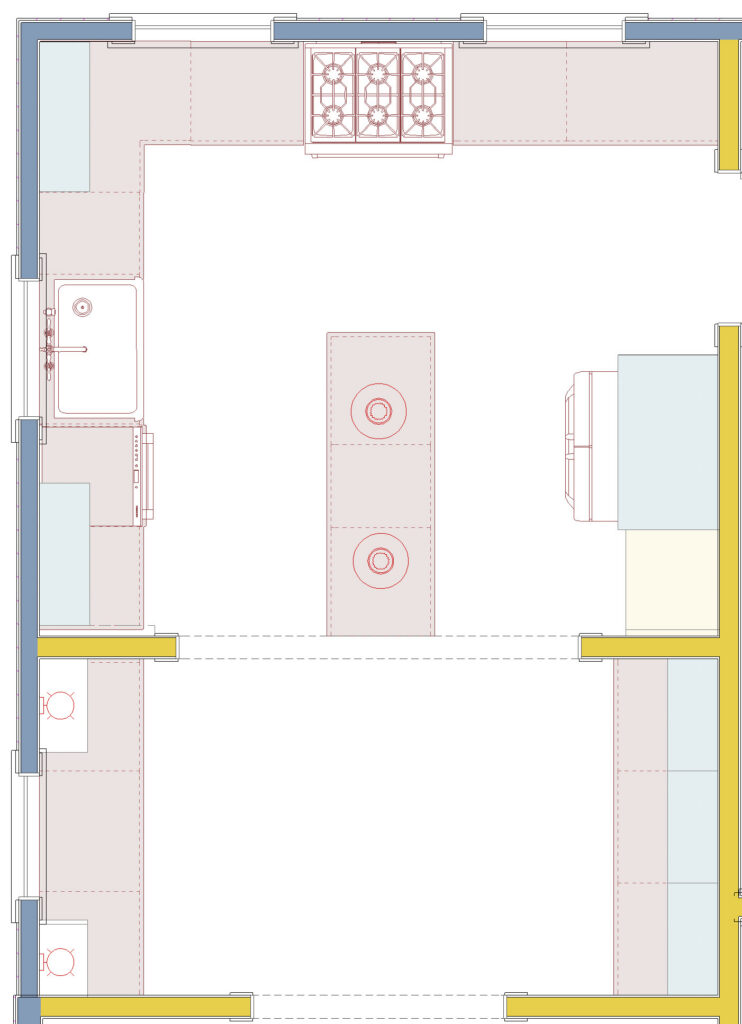
Because with any old house, there are always unknowns—especially before construction begins.
To help the homeowners visualize both directions, the design included detailed layouts and 3D renderings. This step is critical because it allows you to see not just where things go, but how the space will feel once it’s built.
What Happens During Renovation: Unexpected Structural and Plumbing Constraints
Once construction began, we got the answer we had anticipated—but were hoping to avoid.
Plumbing that could not be relocated ran through the structural wall, making removal unrealistic.
Plan A was no longer an option.
So we moved forward with Plan B—the version of the reworked floor plan designed to work within those constraints. Rather than removing a wall completely, we created a large cased opening, which works well in a historic home.
But even then, something wasn’t quite right.
Reworking the Floor Plan During Renovation: Adapting the Design
This is where many renovations go off track—when a layout technically works, but doesn’t feel right.
I could tell from conversations with my client that she didn’t love the design plan. She was having to sacrifice one of her favorite appliances – a double oven – to make the plan work.
Instead of pushing forward with a kitchen she didn’t love, we paused and reworked the floor plan again.
This time, we made a decision I don’t recommend lightly in a historic home:
we removed one of the windows.
In most old house renovations, preserving original windows is a top priority of mine. But good design sometimes requires sacrifices in an old house—it’s about making thoughtful, case-by-case decisions.
Here’s why it worked in this space:
- The window was located at the back of the house, making the change less visible
- Removing it allowed for a significantly more functional kitchen layout
- Two existing windows were resized to maintain balance and allow for cabinetry placement
It was a tradeoff—but the right one.
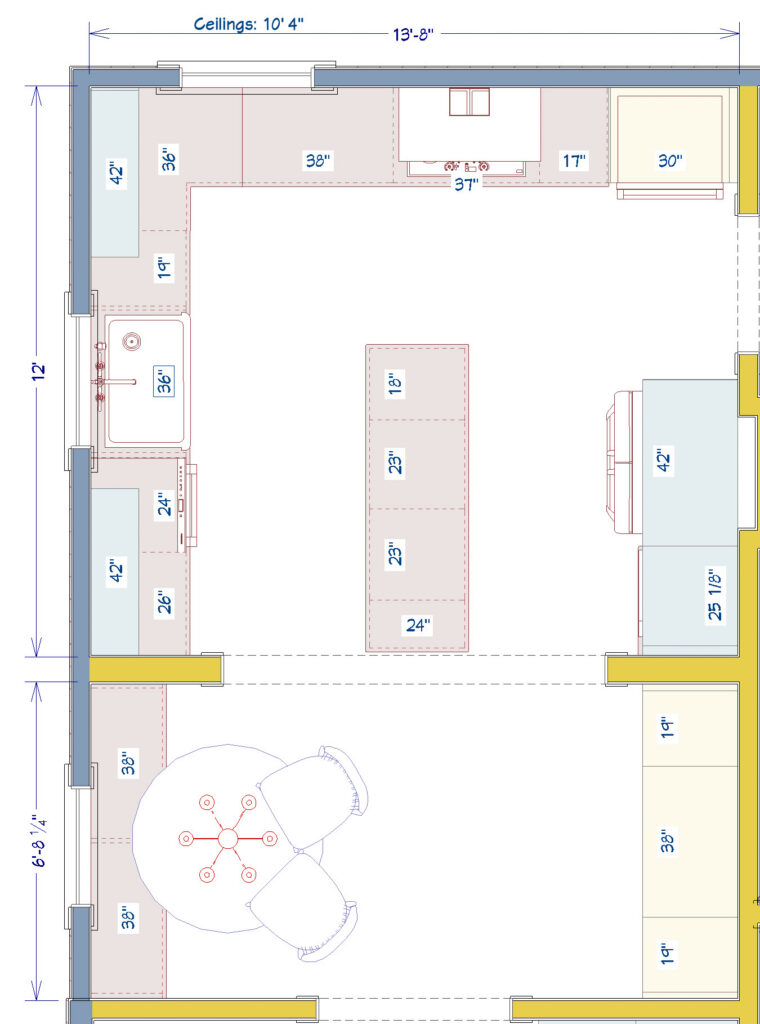
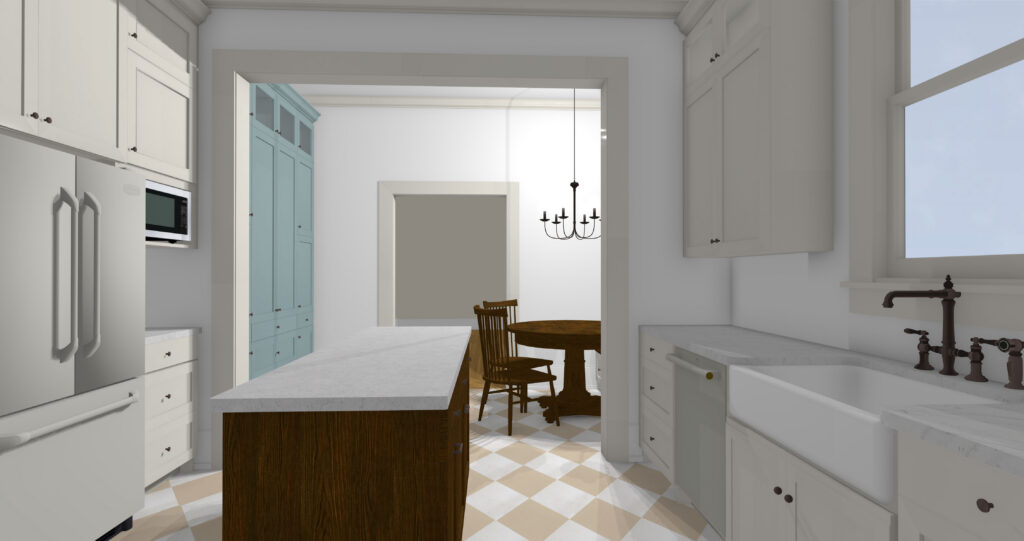
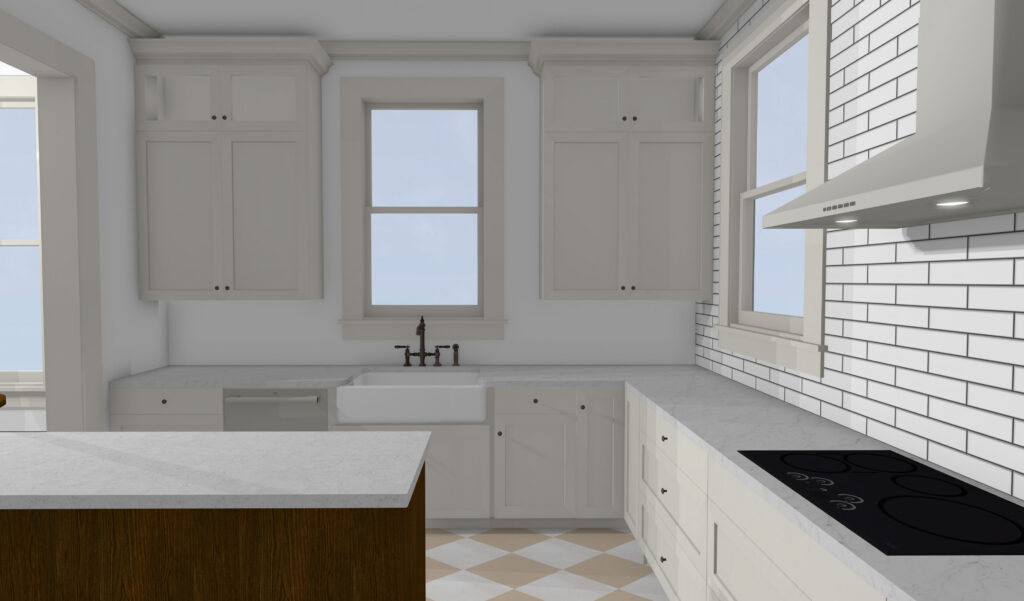
Final Kitchen Design: A Functional Layout for a Historic Home
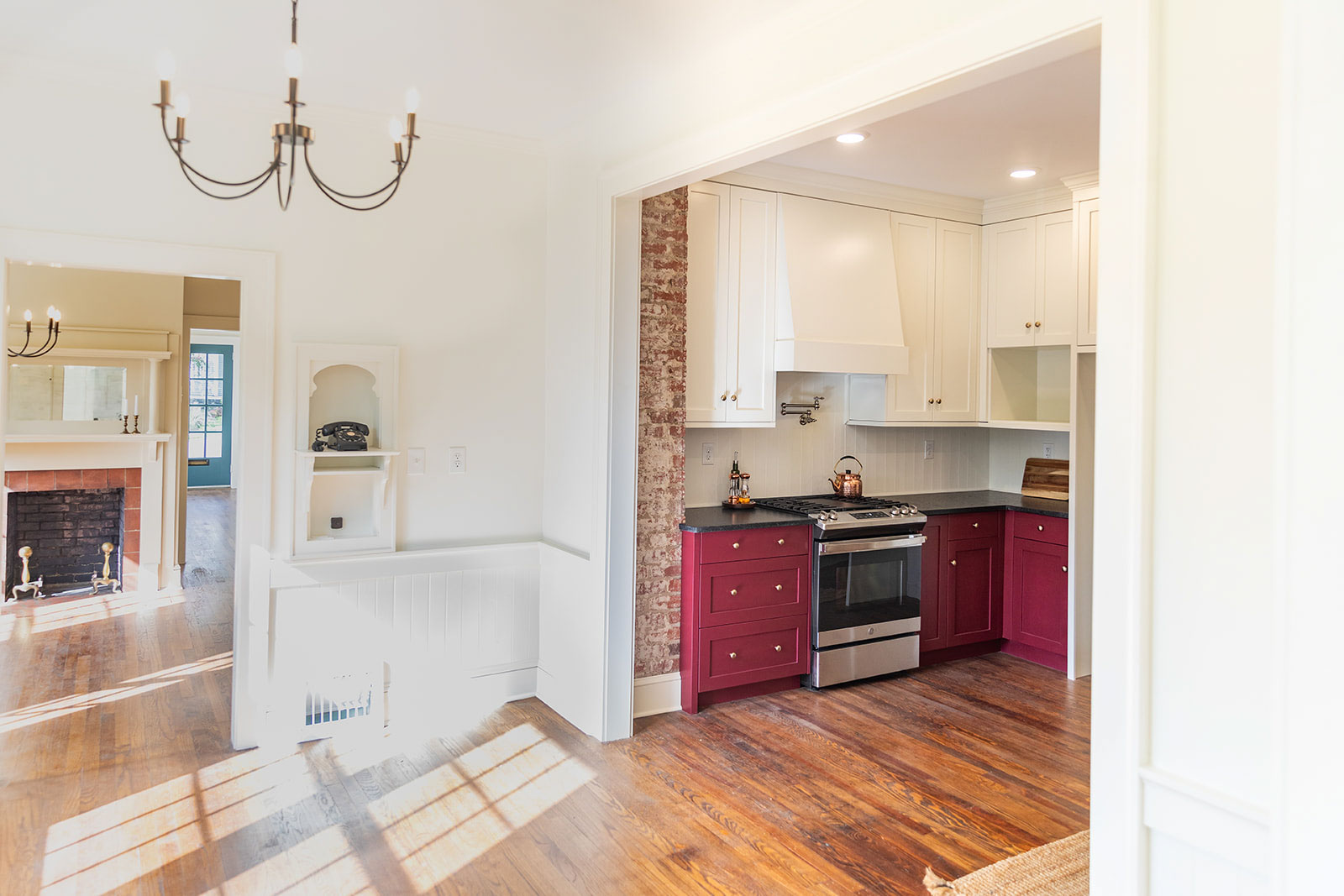
After multiple iterations, we landed on a reworked floor plan that truly works:
- A functional and efficient kitchen layout
- Improved flow between spaces
- Increased storage without sacrificing character
- A design that feels intentional and cohesive
- And most importantly, a kitchen set up for someone who loves to cook.
The final result is a kitchen that supports modern living while still respecting the integrity of the historic home.
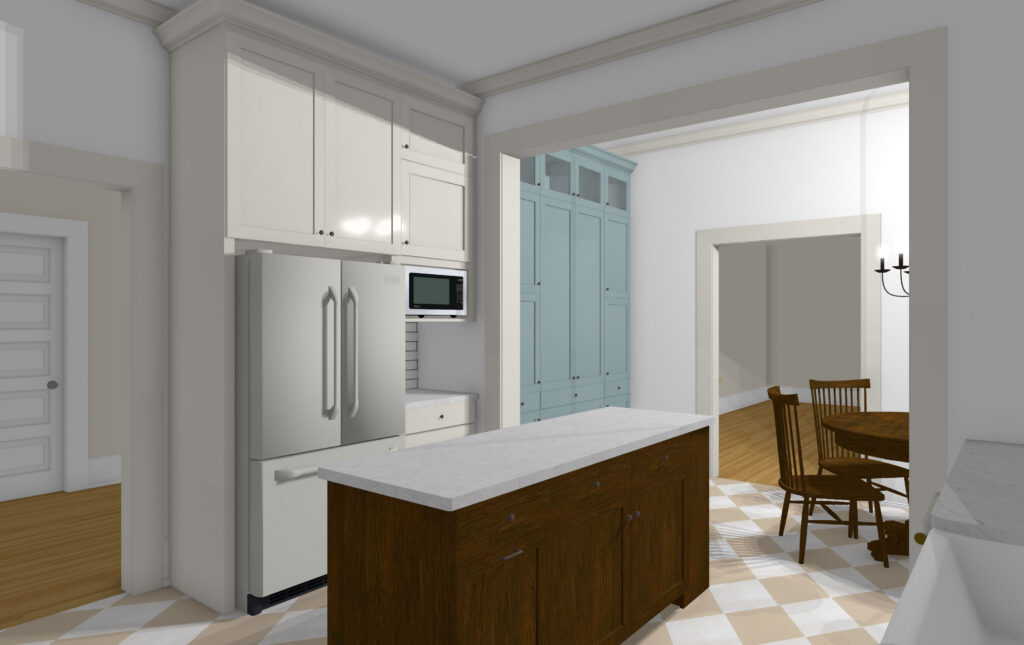
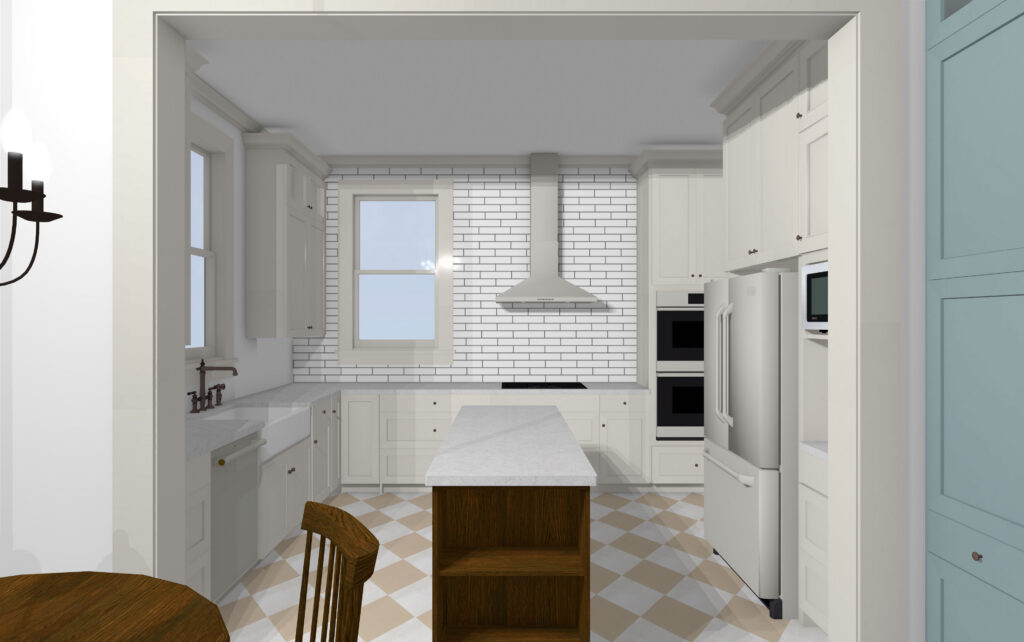
Reworked Floor Plan Services for Historic Homes
If you’re planning a renovation and struggling with your layout, this is exactly where a reworked floor plan becomes invaluable.
My design services are specifically tailored to historic homes and older properties, where standard solutions rarely apply. Each reworked floor plan includes detailed layouts and 3D renderings so you can fully visualize your space before construction begins.
And because renovations don’t always go according to plan, I also offer an add-on service to rework your design during construction—so when unexpected issues arise, you’re not left trying to solve them on the fly.
Final Thoughts
Renovating an old house isn’t about forcing it into a modern mold.
It’s about understanding the constraints, making smart design decisions, and knowing when to pivot.
This project is a reminder that the best results don’t come from the first plan—they come from the right plan.
Even if it takes a few iterations to get there.

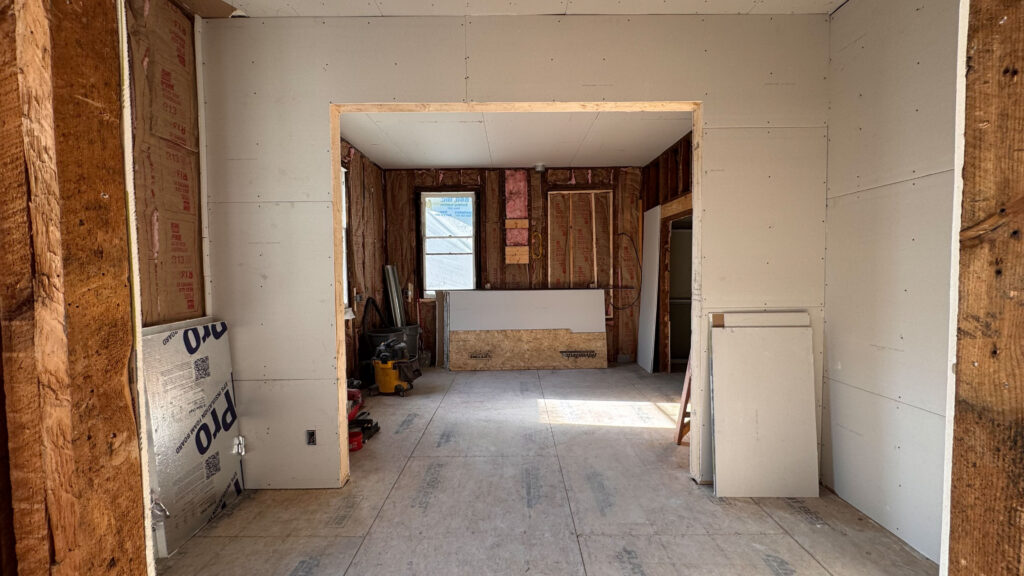
P.S. This project is still under construction but once it’s finished, I’ll be sure to add a link to the final results!




+ Show / Hide Comments
Share to: