

Why a Cased Opening Is Almost Always Better Than Open Concept in a Historic Home

If you’ve ever pitched me the idea of going open concept in your historic home, there’s a good chance I’ve already fired back with: “Have you considered a cased opening instead?” It might not be the answer you were expecting, but in my experience, it’s almost always the better one — and the one that actually makes sense for an old house.
Open concept simply wasn’t a thing when these homes were built. Each room had a purpose, a defined boundary, and a reason for existing. Knocking out walls to chase a trend that came along decades later rarely honors that.
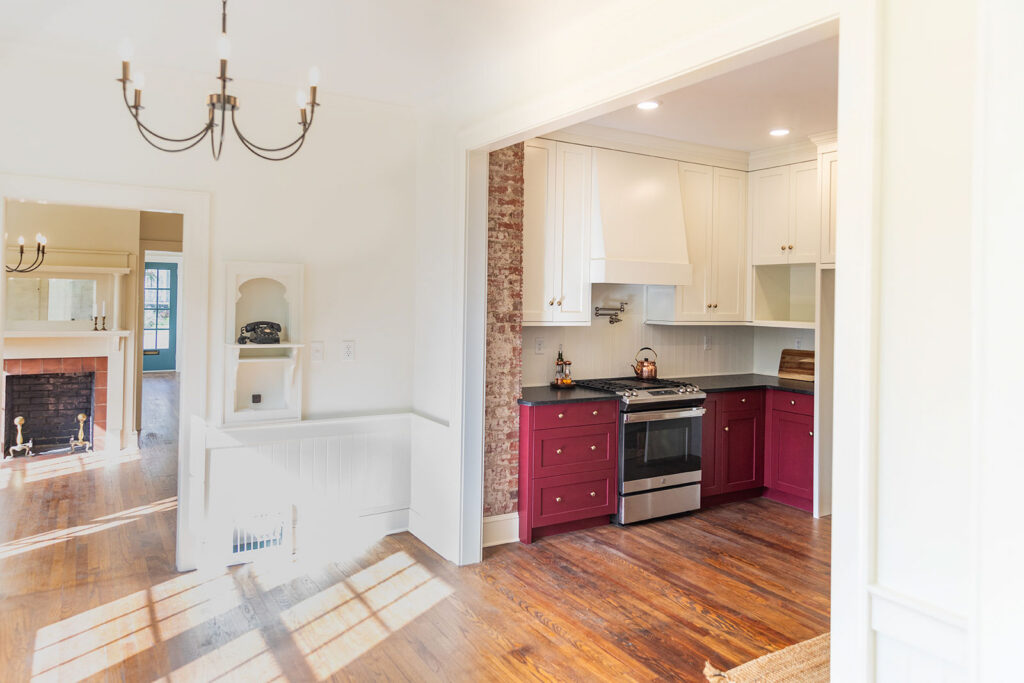
Now, I want to be upfront — I’ve torn down walls before. My own 1914 Bungalow is a perfect example. The kitchen was tiny, and no matter how hard I tried, there was no better option. But that was the exception, not the rule. In general, I push back hard against open concept in old houses, and here’s why.
Why Open Concept Doesn’t Work
in Historic Homes
It’s not historically accurate. These homes were designed with intention. Each room served a specific purpose — the parlor, the dining room, the kitchen. Combining them into one giant multifunctional space erases that logic entirely.
You lose wall space you can’t get back. Old houses already have generous windows and multiple doorways eating into your walls. Remove a wall or two, and suddenly there’s nowhere to put furniture. A sofa, a buffet, a bookcase — all of it becomes a puzzle with no good solution.
You sacrifice the charm that makes the house worth saving. This is the one that gets me the most. Picture railing, crown molding, door casing, baseboards, basecap — all of it disappears when a wall comes down. Those details aren’t decorative afterthoughts. They’re what makes a historic home feel like a historic home.
The Case for a Cased Opening
Sometimes the floor plan really does need to change. I understand that — the way families live today is different from how people lived in 1910, and sometimes a space genuinely isn’t working. But a cased opening, especially a generous one, can give you nearly the same sense of openness without gutting the character of your home.
With a cased opening, you can continue the picture railing right through the transition. You can trim out the opening with casing that matches every other door in the house — same profile, same baseboard, same basecap. These details might seem small, but they make an enormous difference. Done well, a cased opening looks like it was always there. That’s the goal.
Real Projects, Real Results
The Corner Cottage
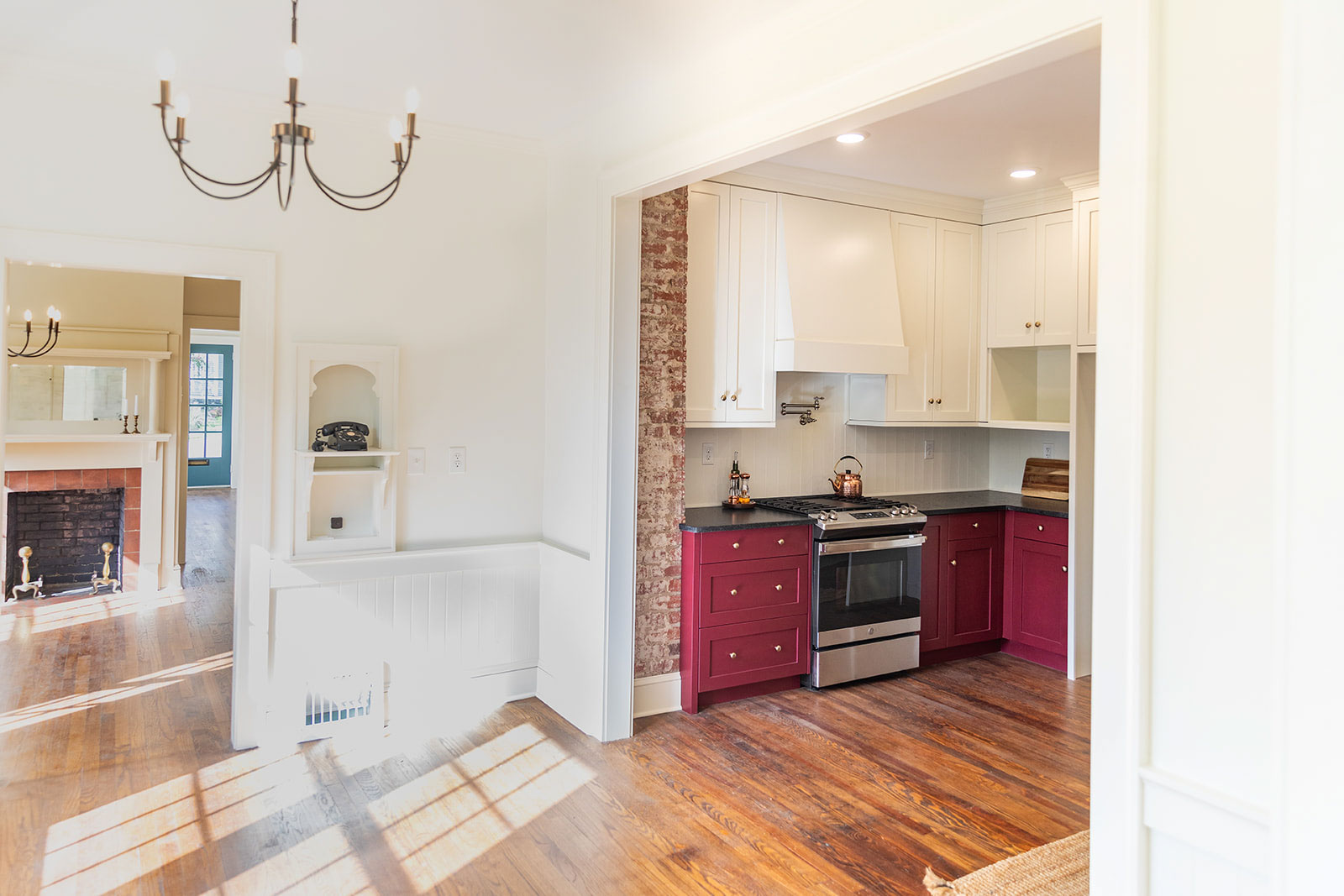
When we renovated the Corner Cottage, the previous owners had already removed a wall between the kitchen and breakfast nook to create an open floor plan. My original intent was to leave it that way. Then demo happened.
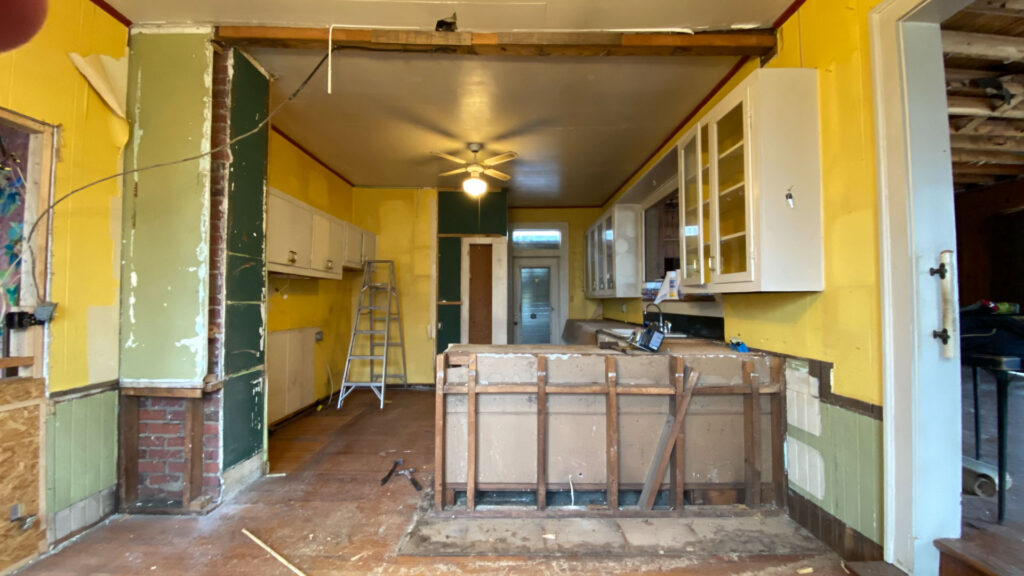
Once we opened things up, it became clear the wall had been providing structural support for an upstairs bedroom — support that was now missing. Rather than engineer around it, I made the call to rebuild the wall with a large cased opening. It ended up being exactly the right decision. The opening gave the cabinetry a natural stopping point and defined the separation between the kitchen and the breakfast nook in a way that felt purposeful. We trimmed it out with casing that matched all the existing doors, and when it was finished, it looked like it had always been part of the house. That’s the best possible outcome.
A Current Client Renovation
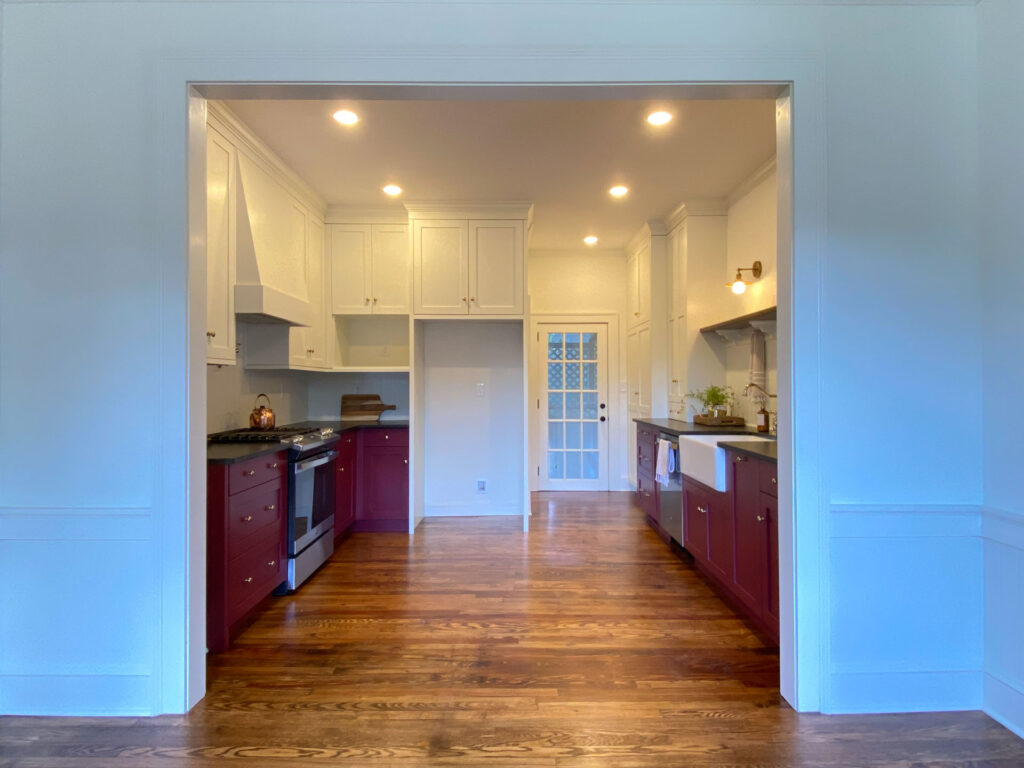
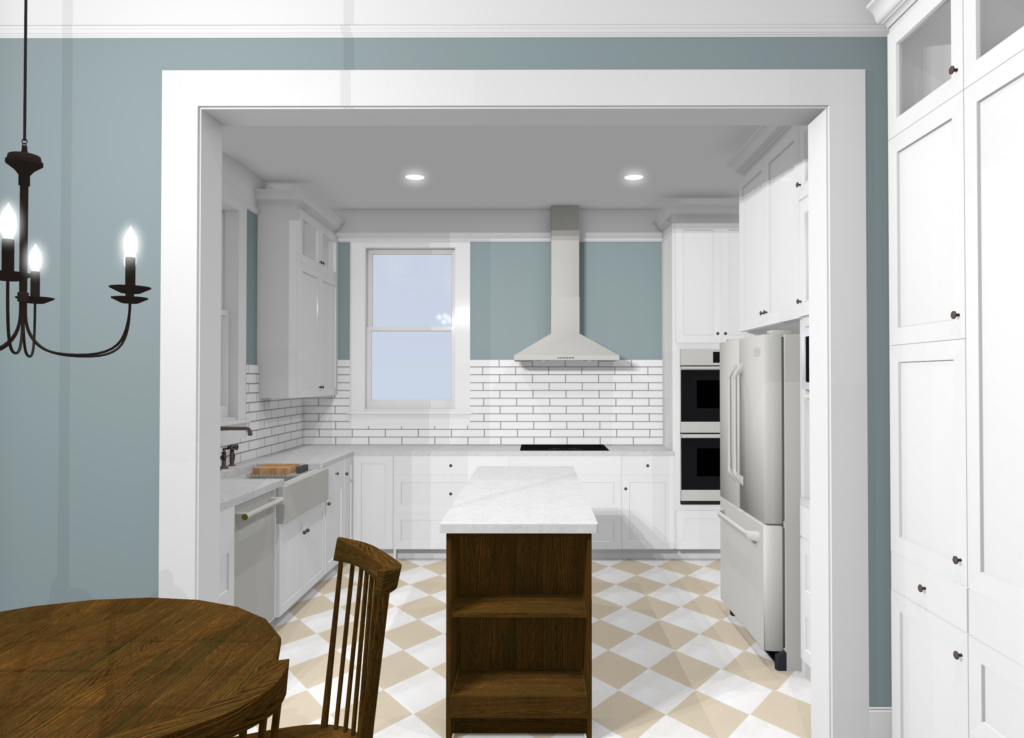
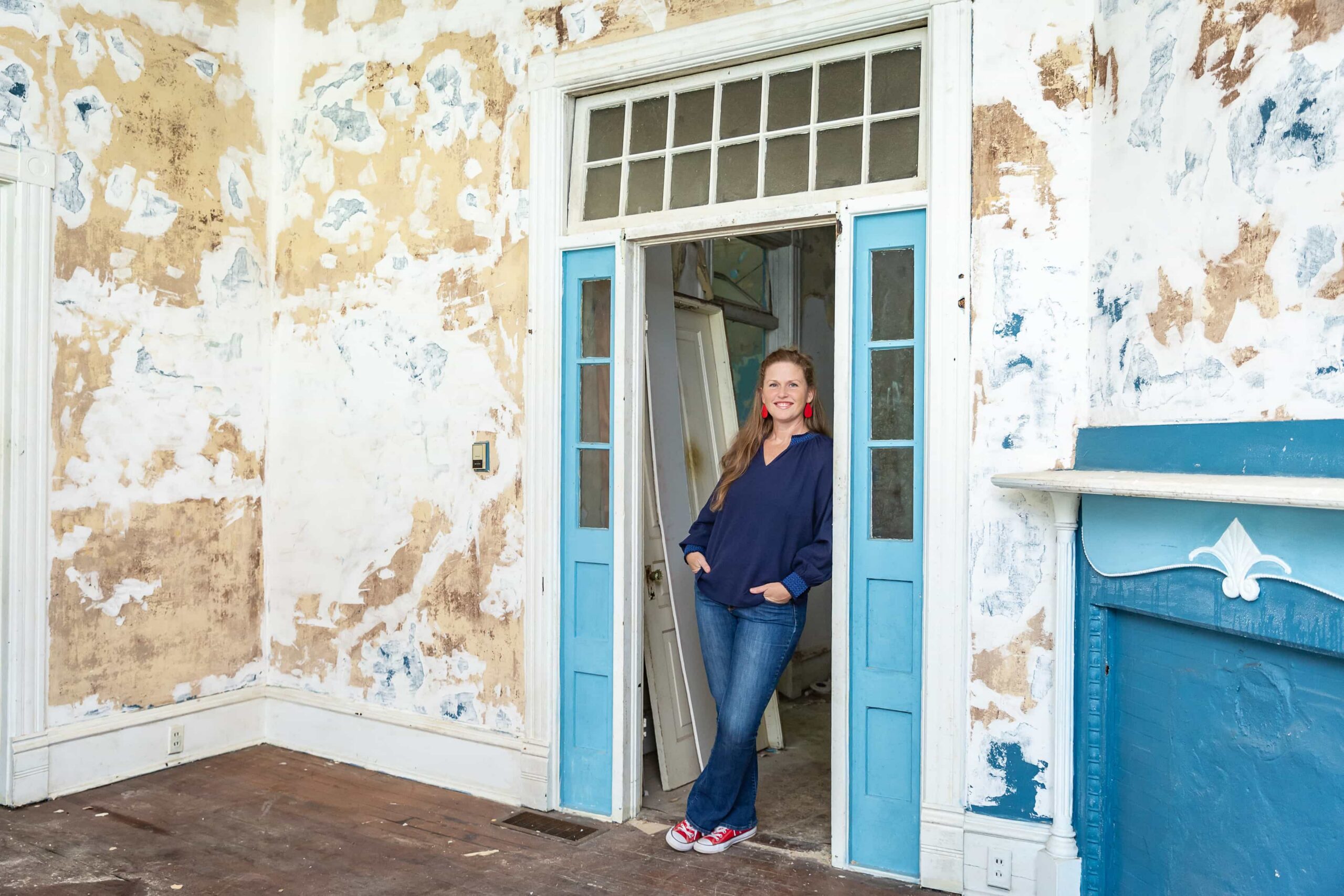
As I write this, we’re in the “putting things back together” phase of a client project that’s been underway for a couple of months. My clients wanted to remove the wall between the kitchen and butler’s pantry so the kitchen would feel more connected to the rest of the house. Completely reasonable goal.
We drew up two floor plans — one without the wall, one with a cased opening — partly because we weren’t sure the wall could come down. There were two concerns: potential structural load and plumbing from an upstairs bathroom running through it.
Once demo was complete and we could actually see what we were working with, it was clear the wall had to stay. We added a header and created a very large cased opening — soon to be trimmed out on both sides with original trim we were able to salvage. The picture railing and baseboards will continue through. The cabinet layout shifted slightly, but everything my clients needed still fits. And when it’s done, it’s going to look intentional in a way that a missing wall never would have.
Details That Make a Cased Opening Work
I’ve touched on a few of these already, but they’re worth spelling out clearly because the details are everything.
- Match your trim. Trim the cased opening with the same casing profile used on the doors throughout your home. If you don’t have enough original material, have it custom milled to match. It’s an extra step and a small added cost, but it’s always worth it.
- Mind the height. Make sure the opening height leaves enough room to run picture railing or crown molding across the top — especially if those details exist in the rooms on either side. A cased opening that cuts off the molding reads as unfinished.
- Size it confidently. As long as a proper header is in place to carry the structural load, you have a fair amount of flexibility on width. I tend to lean toward the middle of what’s possible — large enough to feel open, proportionate enough to feel intentional.
- Account for cabinet depth in kitchens. If the cased opening is going into a kitchen wall, make sure the wall space on either side is deep enough to work. Plan for cabinet depth (typically 25.5 inches with countertop overhang) plus the width of your casing (usually 5 to 6.5 inches), and add a couple of extra inches if you can spare them. It’s easy to end up with an awkward sliver of wall if you don’t think this through early.
- Get the flooring right. If you’re installing new floors, run them continuously through the cased opening. If you’re keeping original floors on both sides, aim for a flush threshold across any gap. A smooth, level transition makes the opening feel like part of the original design rather than a renovation afterthought.
The Bottom Line
I’ve renovated a lot of old houses, and I can say without hesitation: a cased opening wins over removing a wall almost every single time. You get the connection between spaces you’re looking for while keeping the trim, the molding, the wall space, and the integrity that make a historic home worth preserving in the first place.
So the next time someone tries to sell you on open concept, I hope you’ll at least pause and ask: could a cased opening do the job instead? More often than not, the answer is yes.
Have a question about cased openings or a renovation project you’re trying to figure out? Drop it in the comments — I’d love to hear what you’re working on.





+ Show / Hide Comments
Share to: